
A garage door needs immediate repair when it drops, hangs crooked, makes a loud bang, shows a broken spring or a frayed cable, or stops reversing when something blocks it. Stop using the door in those cases. Call a technician in Garland, TX, and keep people and cars clear until the door is checked. If you need garage door repair Garland TX, call a technician before you use the door again.
The quick decision: stop, book soon, or watch
Stop using the door and call now if you see any of these: a gap in a spring, a loud bang, a cable that hangs loose or looks frayed, a door that hangs crooked or drops fast, a door that closes on an object, or a panel that bends inward or pulls away from its hinges.
Book a visit soon, within a few days, if the door still runs in a straight line, but it squeaks, grinds, moves slowly, shakes, or reverses for no clear reason. Do not keep forcing it through the same problem each day.
Why a garage door fails in Garland homes
A sectional garage door works as one system. Springs carry most of the weight. Cables transfer that lift to the door. Rollers and tracks guide the door up and down. Hinges, brackets, and struts hold the panels together. The opener moves the door, and the safety sensors stop it when something blocks the path.
A loud bang, a gap in the spring, or a door that feels heavy
A torsion spring sits on a shaft above the door. An extension spring runs beside the horizontal track on each side. When a spring breaks, you often hear a loud bang in the garage. You may also see a clear gap in the coil, or the door may lift only a few inches and then stop.
Stand clear of the door path. Look at the shaft above the door, from the side, without touching the spring. Do not touch the spring, do not try to wind it, and do not try to lift a heavy door by force. Without spring lift, the opener cannot move the door safely, and the door can drop.
Stop using the door if you have a broken spring. Garage Door Repair Garland TX handles garage door spring replacement for torsion and extension springs, and a technician checks both springs, the cables, and the balance before the door goes back into daily use.
A cable that frays, sags, or comes off its drum
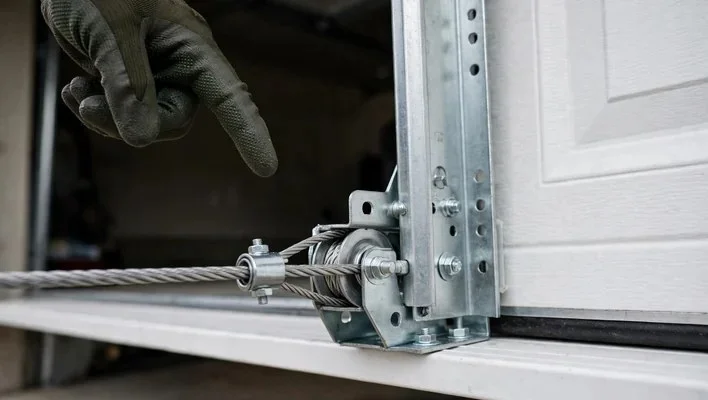
Cables run from the bottom brackets up to drums at the top of the door. They work with the springs to lift the door in a straight line. A cable fails slowly at first. Strands fray near the bottom bracket. Rust spots form. The cable slackens on one side.
Look at the cables from the side of the door, without touching them. A bad cable shows frayed strands, a kink, rust, or slack that pools near the floor. If a cable has come off its drum, the door will often hang crooked. Do not pull a loose cable back onto its drum, and do not loosen a bottom bracket, since those brackets hold cable tension and a sudden release can hurt you.
Stop using the door if a cable is frayed, loose, or off its drum. Call for garage door cable replacement and keep the door closed if you can do that safely.
A door that hangs crooked, sags, or comes off track
A straight door closes with even gaps on both sides. A crooked door tells you the lift is uneven. One spring may be weaker than the other. One cable may be longer than the other. A track may be bent. A roller may be worn or out of its track.
Stand in the driveway and look at the closed door. If one side sits higher, or the door bows in the middle, the door is out of balance. Open the door only if it moves smoothly and stays straight. If it binds, shakes, or scrapes the track, stop, since forcing a door back onto its track bends the track further. A technician checks the track, rollers, cable tension, and hinges first, and you can read more on the garage door roller and track repair page.
Noise that changes, or movement that turns jerky
Noise alone does not always mean danger. A dry hinge squeaks. A roller with a worn bearing grinds. A loose bolt rattles. Noise matters when it changes suddenly, gets louder each week, or comes with uneven movement. Grinding often comes from worn rollers or a track that rubs. Popping often comes from a spring coil or a hinge that shifts under load. Humming from the opener with no door movement often comes from a stripped gear or a disconnected trolley. If your door stops halfway, read why your garage door gets stuck halfway before you keep pressing the remote.
A door that will not open, will not close, or reverses for no reason
Check the opener power, the remote battery, and the wall control. Look at the photo eye sensors near the floor on each side of the door. A sensor blocked by a box, a leaf, or a spider web will stop the door from closing. A sensor knocked out of position will do the same. Wipe each sensor lens gently with a soft cloth, and check that the small light on each sensor stays steady. Do not bend a sensor bracket hard, and do not tape a sensor in place.
If the door opens but will not close, or it reaches the floor and reverses, test auto reverse with care. Place a roll of paper towels in the door path, and close the door with the wall control while you stand clear. The door should touch the roll and reverse. If it pushes the roll flat, or it does not reverse, stop using the door.
If the door will not open at all, do not force it. Read why your garage door will not open for the safe checks you can do, and call if the door feels heavy, looks crooked, or shows a broken spring or cable.
Slow, heavy, or unbalanced movement
A balanced door stays where you leave it. An unbalanced door falls, or it springs up, when you let go. Do this test only when the door looks stable, shows no broken spring, no loose cable, and no roller out of track. Close the door fully, pull the emergency release cord to disconnect the opener, lift the door by hand to waist height, let go gently with your hands ready to catch it, and watch what the door does.
Damaged panels and opener problems
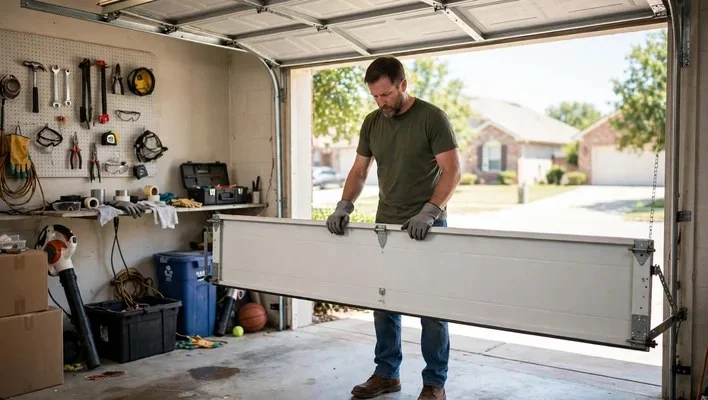
Panels take hits from cars, bikes, basketballs, and hail. A small dent can stay cosmetic. A crack through a panel, a panel that bows inward, or a hinge that pulls away from the panel changes how the door moves. A worn bottom seal lets in rain, dust, insects, and hot air. A technician can often repair one damaged panel and keep the rest of the door. Compare those choices on the garage door panel repair page.
An opener gets blamed for many door problems. A remote that works one day and fails the next can mean a weak battery, a sensor out of position, or an opener board that fails when it heats up. An opener that hums and does not move the door can mean a stripped gear, a disconnected trolley, or a door that is too heavy for the opener to lift. For a full check, see garage door opener repair. Brands in Garland homes include LiftMaster, Chamberlain, Genie, and Craftsman. If your opener makes a grinding noise, read why your garage door makes grinding noises and note whether the noise comes from the motor, the rail, or the rollers.
When to call a technician for garage door repair Garland TX, and what to say
Call a technician now if the door shows a stop sign from the first section. Call soon if the door shows two or more book soon signs at once. Call even if you are not sure. When you call, say what the door does and when it started, what you see, what you hear, and where you live in Garland, such as Duck Creek, Firewheel, or near Downtown Garland, so the visit can be routed well.
Repair versus replacement
| Situation | Repair usually makes sense | Replacement usually makes sense |
|---|---|---|
| One spring breaks, panels are straight | Yes, replace the spring set and check balance | No, unless other parts are worn out |
| One cable frays, tracks and rollers are sound | Yes, replace the cable set and check drums | No |
| One panel dents, hinges and tracks are sound | Yes, repair or replace that panel | No, unless the panel style is no longer made |
| Several panels crack, frame shifts, or track bends | Sometimes, if the frame is sound | Yes, see garage door installation if panels, tracks, and opener all need work at once |
Safe checks, jobs to leave alone, and seasonal care
Safe checks are simple: look at springs, cables, rollers, tracks, hinges, and panels from the side, without touching high tension parts; wipe sensor lenses with a soft cloth; replace remote batteries; lubricate hinges, roller bearings, and springs, and keep tracks clean and dry; do the balance check only when the door shows no danger sign; and test auto reverse with a roll of paper towels, standing clear.
Leave these jobs to a technician: adjusting, winding, or replacing springs; replacing cables, or loosening bottom brackets; rewinding cable drums; forcing a door back onto its track; replacing a stripped opener gear while the door is heavy or crooked; and turning up opener force to make a sticky door close, which hides the real problem and can stop auto reverse from working.
FAQs: questions Garland homeowners ask
Can I open my garage door with a broken spring?
No, you should not. A door without spring lift is heavy, and it can drop when you let go. Keep the door closed and call a technician.
How do I know if my spring is broken or just weak?
A broken torsion spring often shows a clear gap in the coil, and the door lifts only a few inches or not at all. A weak spring shows a door that feels heavier each week, or an opener that strains. A loud bang points to a break.
Can I fix a garage door sensor myself?
You can wipe the lens, clear a blockage, and check that each sensor points at the other one. Do not bend a bracket hard, tape a sensor in place, or bypass a sensor. A sensor that still blinks needs a technician.
When should I call a technician instead of trying a fix myself?
Call a technician when you see a broken spring, a frayed or loose cable, a door off track, a bent track, or a door that fails the auto reverse test. When in doubt, call.
What to do today
Walk to your garage now, and do the safe look. Stand clear of the door path. Look at the springs, cables, rollers, tracks, and panels. Test the sensors. If you see a stop sign, stop using the door and call. If you see a book soon sign, book a visit in the next few days, and do not keep forcing the door through the same problem.
Garage Door Repair Garland TX serves Garland, and nearby Plano, Richardson, garage door repair in Rowlett TX, and garage door repair in Sachse TX, from 2456 Belt Line Rd, Garland, TX 75044. Call (214) 829-0201, tell the team what you see and hear, and get a written price before work starts. A fast call and a balance and safety test after the repair keep a warning sign from turning into a door that will not open when you need it.
Published by the team at Garage Door Repair Garland TX. Garage Door Repair Garland TX, 2456 Belt Line Rd, Garland, TX 75044, (214) 829-0201.